
Introduction
Leadership is one of the most valuable skills anyone can develop, regardless of their profession or career stage. Whether you are managing a team, running a business, leading a classroom project, or simply influencing those around you, strong leadership abilities can help you achieve better results and inspire others. Great leaders are not born with extraordinary talents; they develop their abilities through continuous learning, practice, and experience.
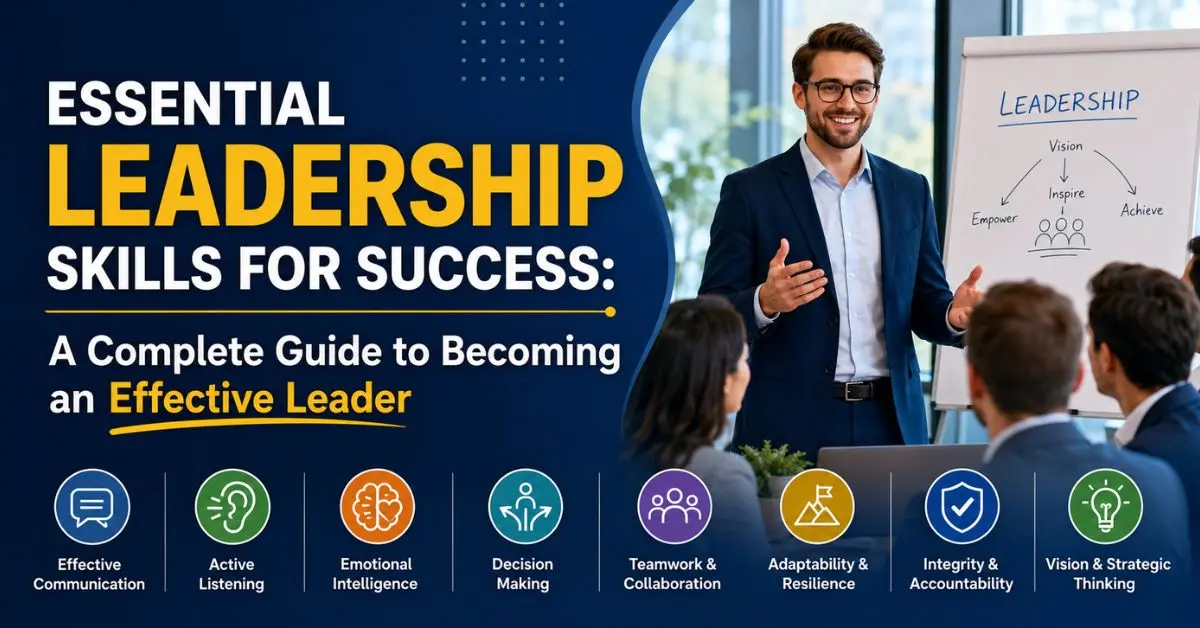
The essential leadership skills for success include communication, decision-making, emotional intelligence, problem-solving, teamwork, adaptability, and integrity. These qualities enable leaders to motivate people, solve challenges, and create positive environments where everyone can perform at their best.
In today’s fast-changing world, organizations seek individuals who can guide teams through uncertainty while maintaining productivity and trust. Even if you do not currently hold a leadership position, developing these skills can improve your confidence, career opportunities, and personal relationships.
This guide explains what leadership skills are, why they are important, how to develop them step by step, their benefits, common mistakes to avoid, frequently asked questions, and expert tips to help you become a more effective leader.
What Are Essential Leadership Skills?
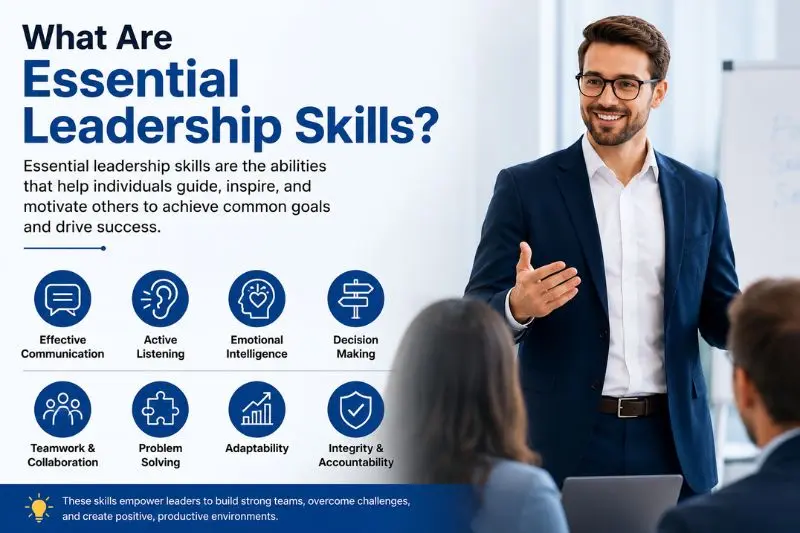
Essential leadership skills are the personal and professional abilities that enable individuals to guide, motivate, and support others toward achieving shared goals. These skills combine technical knowledge with interpersonal qualities that help leaders build trust, make sound decisions, and encourage teamwork.
Some of the most important leadership skills include:
- Effective communication
- Active listening
- Emotional intelligence
- Decision-making
- Problem-solving
- Time management
- Team building
- Adaptability
- Accountability
- Strategic thinking
- Conflict resolution
- Confidence with humility
A successful leader uses these abilities together rather than relying on just one strength.
Why Are Essential Leadership Skills Important?
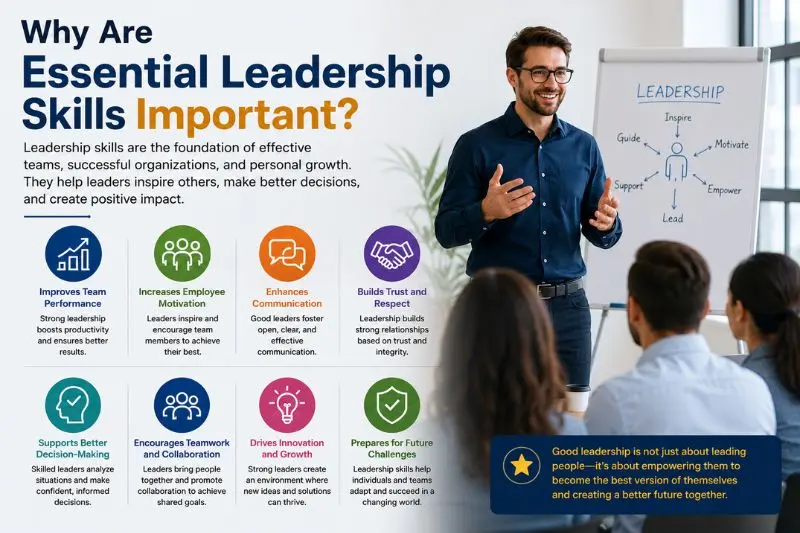
Leadership skills influence how individuals and teams perform. Strong leaders create clear direction, encourage collaboration, and help others overcome obstacles.
Key reasons leadership skills matter include:
- They improve team productivity.
- They increase employee motivation.
- They strengthen workplace communication.
- They build trust and respect.
- They support better decision-making.
- They improve conflict resolution.
- They encourage innovation.
- They prepare individuals for career advancement.
Organizations often promote employees with strong leadership abilities because they can manage responsibilities while inspiring others to succeed.
Step-by-Step Guide to Developing Leadership Skills
Step 1: Improve Your Communication
Communication is the foundation of effective leadership. Practice expressing ideas clearly, listening carefully, and providing constructive feedback.
Ways to improve include:
- Speak clearly and confidently.
- Listen without interrupting.
- Ask thoughtful questions.
- Confirm understanding before making decisions.
Step 2: Build Emotional Intelligence
Emotional intelligence helps leaders understand both their own emotions and those of others.
Develop this skill by:
- Practicing empathy.
- Managing stress calmly.
- Controlling emotional reactions.
- Understanding different perspectives.
Leaders with emotional intelligence build stronger relationships and healthier work environments.
Step 3: Learn Decision-Making
Good leaders make informed decisions using facts, experience, and careful analysis.
To improve:
- Gather relevant information.
- Consider available options.
- Evaluate possible risks.
- Make timely decisions.
- Review the results afterward.
Step 4: Develop Problem-Solving Skills
Challenges are unavoidable in leadership. Strong leaders focus on finding practical solutions instead of blaming others.
Effective problem-solving includes:
- Identifying the root cause.
- Brainstorming possible solutions.
- Evaluating outcomes.
- Taking action quickly.
- Monitoring progress.
Step 5: Strengthen Teamwork
Leadership is about helping others succeed.
Encourage teamwork by:
- Respecting every team member.
- Delegating responsibilities fairly.
- Celebrating achievements.
- Supporting collaboration.
- Encouraging open discussion.
Step 6: Practice Adaptability
The modern workplace changes rapidly. Leaders who adapt quickly remain effective during uncertainty.
Improve adaptability by:
- Accepting change positively.
- Learning new skills regularly.
- Remaining flexible.
- Staying open to feedback.
Step 7: Manage Time Effectively
Time management allows leaders to focus on priorities.
Useful strategies include:
- Setting daily goals.
- Prioritizing important tasks.
- Avoiding unnecessary distractions.
- Delegating when appropriate.
- Reviewing progress regularly.
Step 8: Lead by Example
People observe a leader’s behavior more than their words.
Demonstrate leadership by:
- Being honest.
- Keeping promises.
- Showing respect.
- Taking responsibility.
- Maintaining professionalism.
Benefits of Essential Leadership Skills
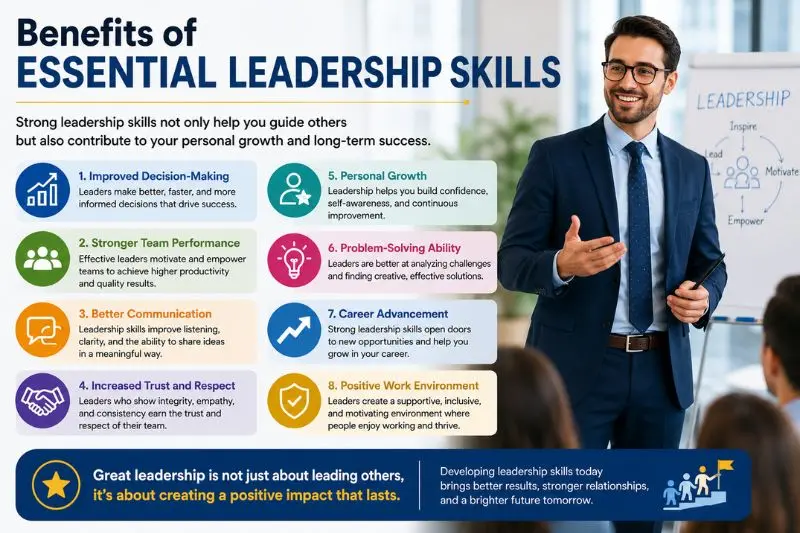
Developing leadership skills provides advantages in every area of life.
- Increased confidence
- Better communication abilities
- Stronger decision-making
- Improved teamwork
- Higher productivity
- Greater career opportunities
- Enhanced problem-solving skills
- Better conflict management
- Increased employee satisfaction
- Stronger professional relationships
- Greater adaptability to change
- Long-term personal growth
These benefits make leadership development a valuable investment for students, professionals, entrepreneurs, and managers alike.
Disadvantages and Risks
Although leadership offers many rewards, it also comes with responsibilities and challenges.
Some common risks include:
- Increased pressure and accountability
- Difficult decision-making situations
- Managing workplace conflicts
- Balancing multiple responsibilities
- Risk of burnout without proper work-life balance
- Handling criticism from others
- Managing diverse personalities
- Adapting to constant organizational changes
Recognizing these challenges helps leaders prepare and respond more effectively.
Common Mistakes to Avoid
Many new leaders unintentionally limit their effectiveness by repeating avoidable mistakes.
Common leadership mistakes include:
- Poor communication
- Micromanaging team members
- Ignoring employee feedback
- Avoiding difficult conversations
- Resisting change
- Failing to delegate responsibilities
- Making emotional decisions without facts
- Not admitting mistakes
- Neglecting continuous learning
- Focusing only on short-term results
Avoiding these habits allows leaders to build stronger teams and lasting credibility.
Can leadership skills be learned?
Yes. Leadership is a learnable skill. With consistent practice, education, experience, and feedback, anyone can become a more effective leader.
What is the most important leadership skill?
Communication is often considered the most important because every leadership responsibility depends on clear understanding, active listening, and effective collaboration.
How long does it take to become a good leader?
Leadership development is an ongoing journey. Noticeable improvement can occur within months of consistent practice, but great leaders continue learning throughout their careers.
Why is emotional intelligence important in leadership?
Emotional intelligence helps leaders understand emotions, manage relationships, resolve conflicts, and build trust among team members.
Can introverts become successful leaders?
Absolutely. Many successful leaders are introverts who excel through thoughtful decision-making, careful listening, empathy, and strategic thinking.
How can I improve my leadership skills every day?
Practice active listening, seek feedback, read leadership books, accept new responsibilities, observe experienced leaders, and reflect on your daily decisions.
Expert Tips and Bonus Points
To accelerate your leadership development, apply these practical recommendations:
- Read books on leadership regularly.
- Find a mentor with leadership experience.
- Request honest feedback from colleagues.
- Practice public speaking whenever possible.
- Learn from both successes and failures.
- Continue developing technical and soft skills.
- Stay organized using daily planning methods.
- Build trust through honesty and consistency.
- Celebrate team achievements.
- Never stop learning and improving.
Remember that leadership is measured by the positive impact you create, not simply by your job title.
Conclusion
Developing is one of the smartest investments youessential leadership skills for success can make in your personal and professional life. Leadership extends far beyond managing people or holding a senior position. It is about inspiring others, making responsible decisions, solving problems, and creating an environment where everyone can achieve their best.
Every successful leader begins as a learner. By improving communication, emotional intelligence, decision-making, teamwork, adaptability, and accountability, you can gradually become someone others trust and respect. Consistent practice, self-reflection, and a willingness to learn from experience are the keys to long-term growth.
Leadership also requires patience. There will be challenges, setbacks, and moments of uncertainty. However, those experiences often become the greatest learning opportunities. Instead of striving for perfection, focus on continuous improvement and genuine service to others.
Whether your goal is to lead a small team, manage a growing business, or simply become a positive influence in your community, developing strong leadership skills will help you reach new levels of success. Start with one skill at a time, practice it consistently, and build habits that inspire confidence, trust, and lasting achievement.
